Plants To Forage This Summer
We’re having a pretty amazing summer so far and it’s definitely reflecting in the plant life! As much as they might be craving a little more water between these glorious sunny days the plant life has certainly come up trumps with many forage-ables growing in abundance this year.
As with all foraging, be 100% sure of your plant ID and remember to forage responsibly and sustainably. And with those factors in mind, let’s look at what options are out there at the moment so you can enjoy a foraged feast.
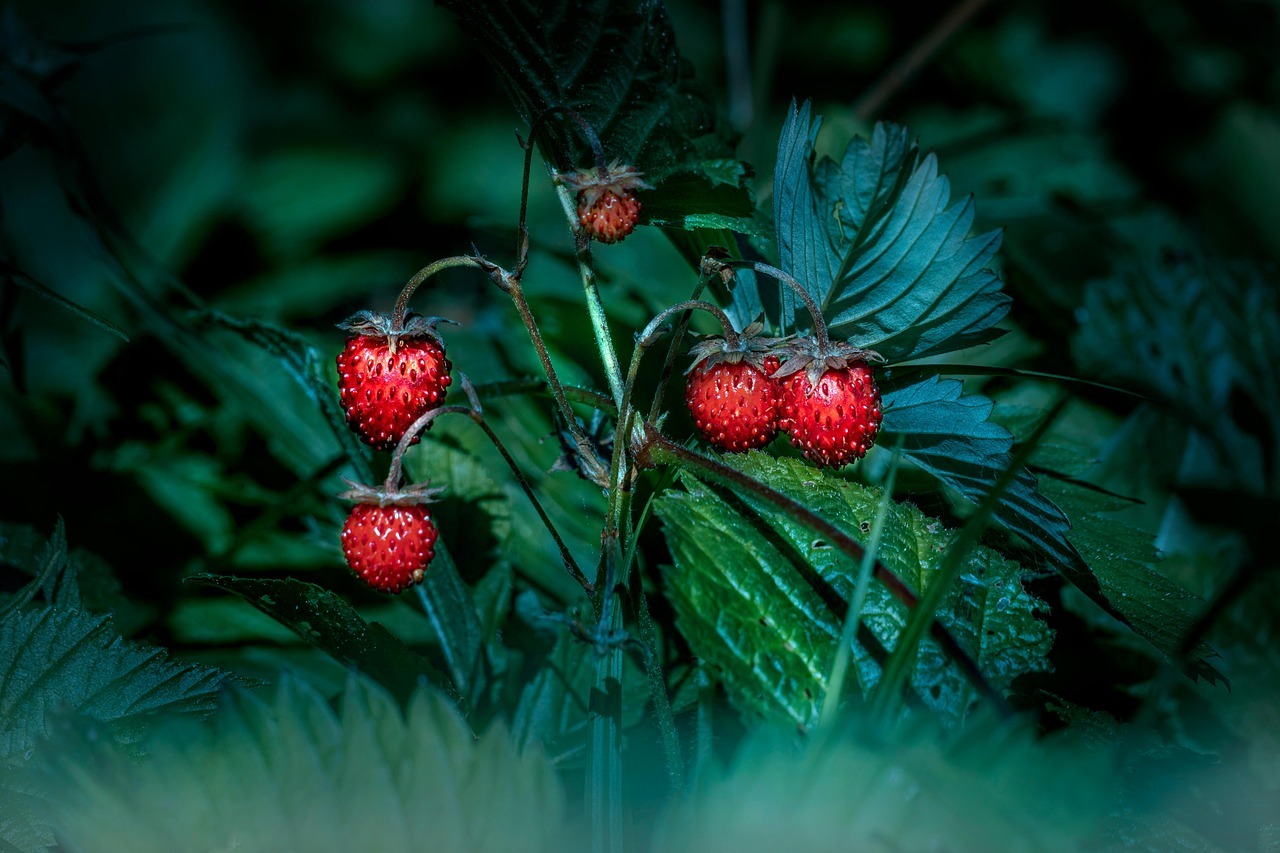
Wild Strawberries (Fragaria vesca)
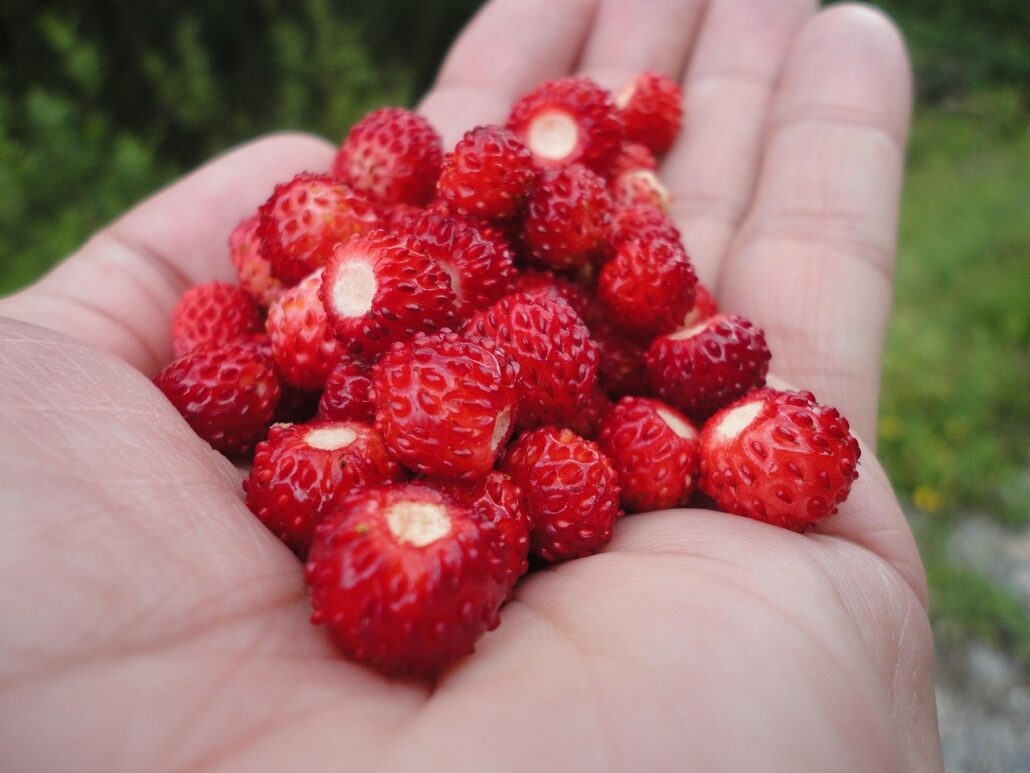
Easy to identify, these little juicy gems grow in areas with little moisture and sunlight. Like their cultivated cousins wild strawberries are packed full of vitamin C….just in a smaller juicy form. The leaves, flowers and fruit itself are all very similar to the cultivated strawberry many of us grow at home, but the fruit itself is far smaller.
Wild strawberries can be eaten raw but have a slightly tarter flavour which is refreshing on a hot day, but also work well in many different recipes too. Wild strawberry and Elderflower jam is a great option at this time of year while both are in their prime for picking.
Elderflower (Sambucus nigra)
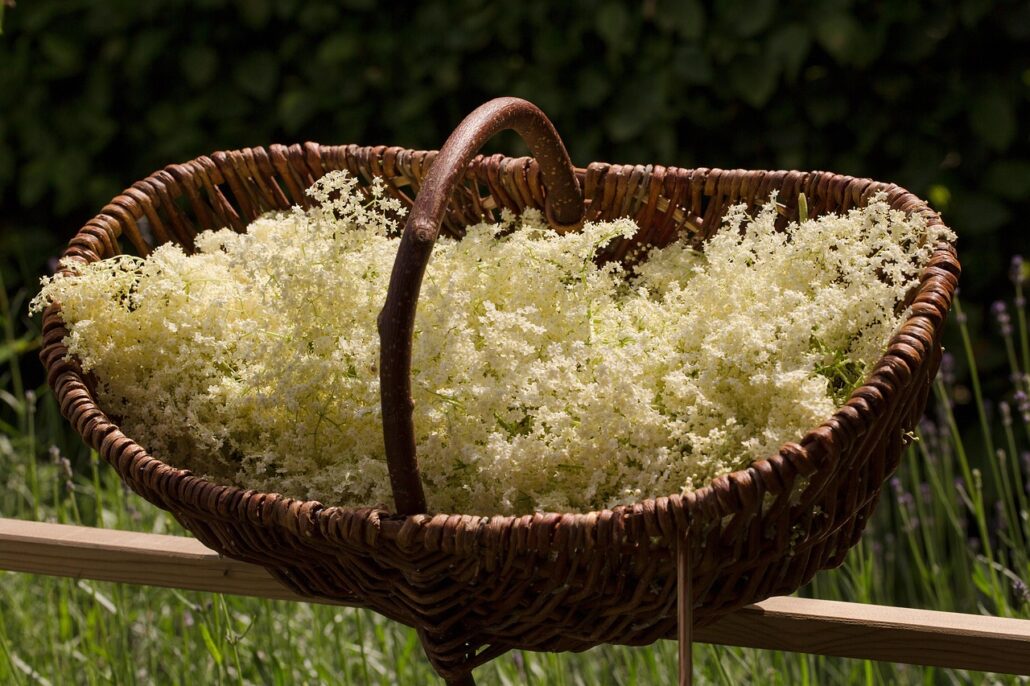
The Elder tree is currently flowering, and these large heads of white/creamy coloured small flowers are delicious!
Elderflower has traditionally been used, eaten raw, to help allergies during allergy season. It has also been found to ease cold and flu symptoms – just like in its berry form.
This flower is very versatile with distinctive sweet summery flavour it works well made into cordials, syrups and champagne. It can also be added raw to summer salads or cooked in a light batter to make elderflower fritters.
Remember when foraging this large head of small white flowers that you should be foraging them from the Elder tree, if you are picking something that looks similar growing on a shrub or small plant….then it’s NOT elderflower!
Elderberry (Sambucus nigra)
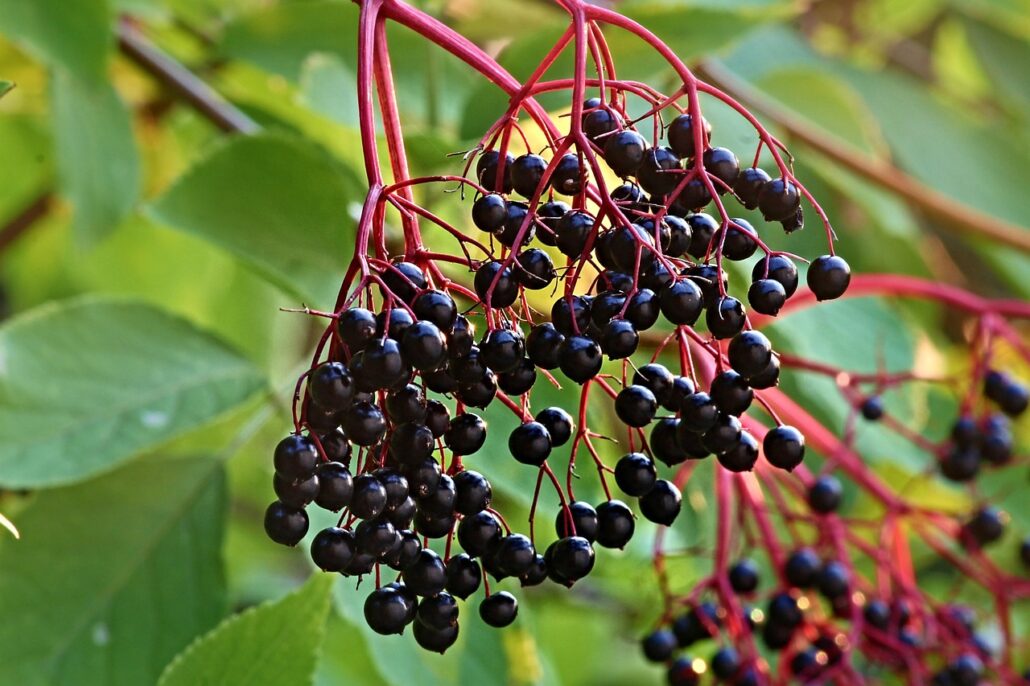
When the elderflower has been pollinated it matures into elderberries, a cluster of dark purple berries growing on the elder tree.
Elderberries have been used for centuries to treat colds, coughs and flu due to its high antioxidant and Vitamin C levels. It is thought that the berries have anti-inflammatory properties and can support good heart health too.
It is recommended NOT to eat them raw as can lead to nausea, vomiting and diarrhoea, but they work very well cooked. Elderberry syrup is a great form to use these berries in if being used for health benefits as can be taken with just a spoonful at a time to get a good hit of antioxidants and Vitamin C, but they are also a delicious addition purely for flavour too, working well in jams, jellies and sauces that go well with meat and cheeses.
Red Clover (Trifolium pratense)
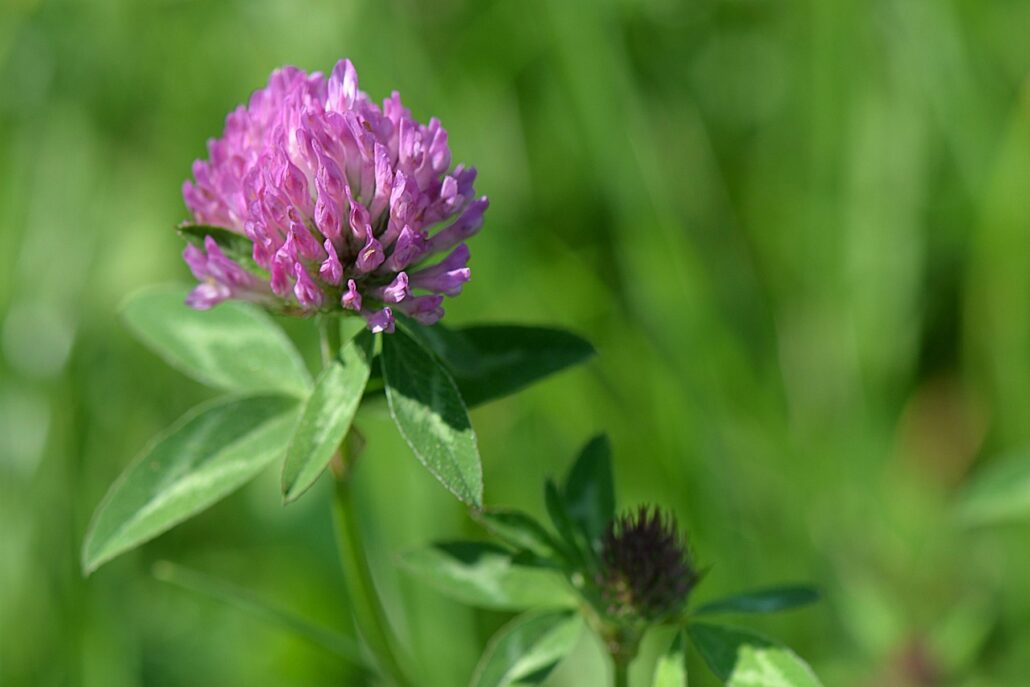
Red Clover is a herbaceous species of flowering plant in the legume family and grows in abundance across the UK, often found in meadows, gardens and pastures as well as along hedgerows and verges.
In herbal medicine red clover is used to treat a variety of ailments, such as skin and respiratory problems along with hormone imbalances too.
Both leaves and flowers are edible. The leaves can be tossed into salads and used in teas, but the flowers have the best flavour and more health benefits.
The flower has a slight pea flavour with a fragrant sweetness when eaten raw. The flowers work well broken up over summer salads, steeped in hot water to make tea or added to bakes.
Chickweed (Stellaria media)
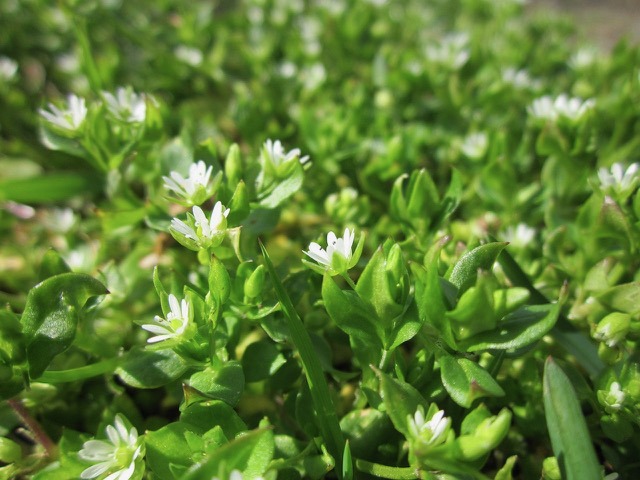
Don’t be put off by its name – this spring edible is packed full of nutrients and regularly used in herbal remedies. This broadleaf weed has egg shaped leaves with pointy tips. The white flowers with elongated petals are edible too when they appear later in the season.
These make a nutritional addition to an early spring salad, stew or smoothie.
Not to be confused with the poisonous yellow pimpernel – a key identification feature to look for in the chickweed is a visible single line of hairs running down one side of the stem – if there isn’t, don’t chance it.
Red Currants (Ribes rubrum)
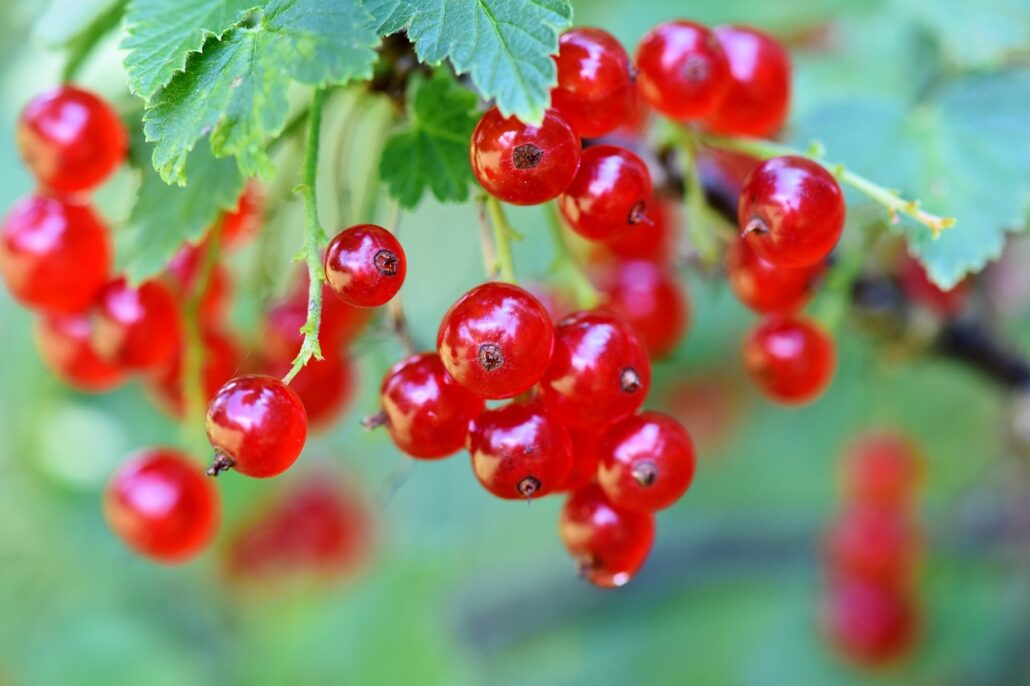
Have you seen any red currants yet?
The bright red translucent berries are ripe between June and the end of August and hang down in small clusters. The leaves are a palmate shape with 3 – 5 lobes, they have no scent when crushed, unlike the black currant that has a distinctive smell when crushed.
Red currants are little juicy gems packed with health boosting nutrients. Packed full of antioxidants and health boosting vitamins, red currants are a great addition to your daily fruit intake.
The berries with their distinctive tart flavour can be eaten raw, but be careful as too many can lead to digestive discomfort. Red currants do work really well cooked in to a wide variety of dishes though where they become far more palatable. They work well in recipes such as jams, puddings and rich sauces that go well with game.
The local wildlife are equally found of these vibrant little treats so we have to be quick if we want any! We only take a few for ourselves and are sure to leave the majority for the wildlife who rely more heavily on these foraged goodies than we do.
Mallow (Malva sylevestris)
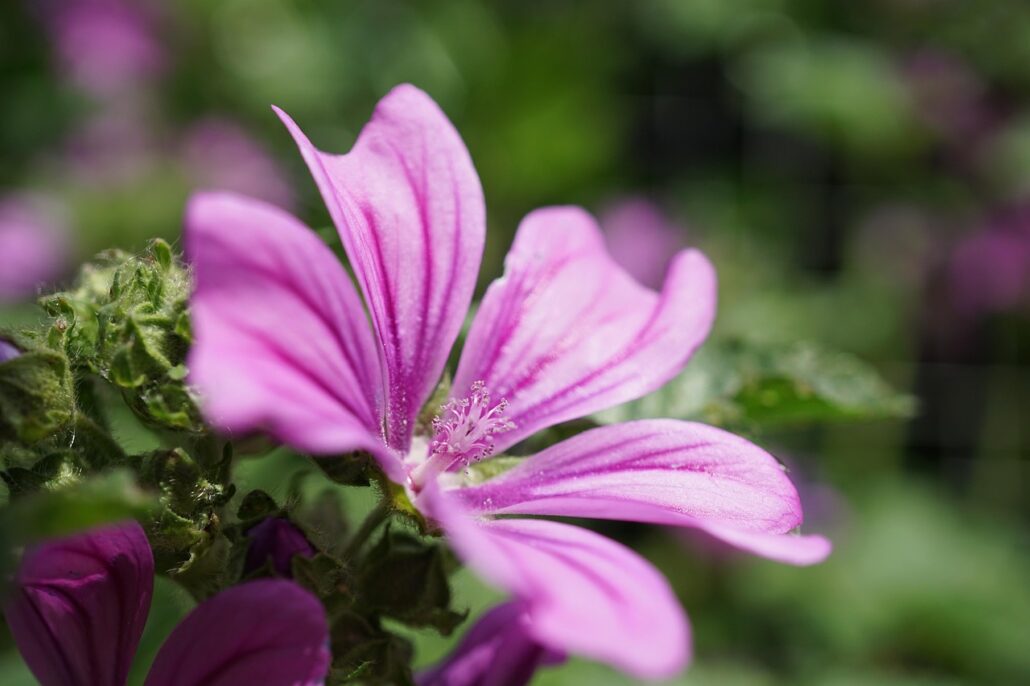
The Mallow leaves, seeds and the flower, which is now out in bloom, are all edible. Mallow is highly regarded in traditional herbal medicine, used to treat multiple ailments.
Mallow is high in nutritional value, containing good levels of calcium, iron and vitamin C. The vitamin C content of the plant means that the iron is more effectively absorbed when eaten making this a nutrient rich addition to summer salads, or steeped in hot water to make tea.
If eaten raw, be aware that the leaves are furry and this is not a texture everyone appreciates, so you may prefer it cooked into soups and stews giving the dishes a deep richness.
The flowers are more palatable raw compared to the leaves and can be used in deserts and salads. While the nutty flavour of the pea-sized seeds makes them a great addition to snacks and trail mixes for a boost of protein, or they can be toasted on a dry heat and added to curries.
Mallow prefers lighter areas with good soil so is commonly found on the edge of hedgerows, woodland and pastures, so keep an eye out while you’re on your adventures.
Blackberries (Rubus subg. Rubus)
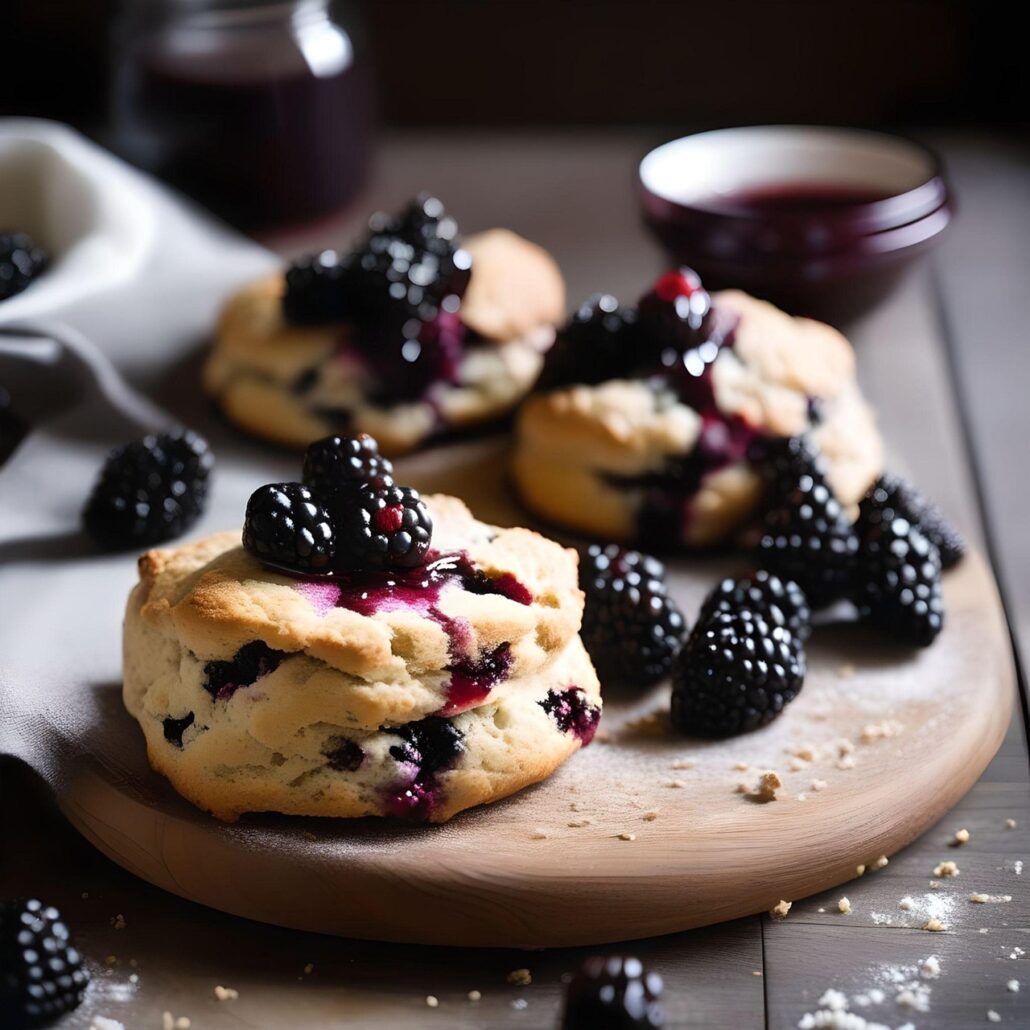
Looking at the amount of blackberries already growing it looks like we’re in for a bumper crop this year!
The bramble plant has a lot to offer foragers, with their edible leaves (that are best foraged when they are young and bright green) and the edible petals of the flowers too. But it’s the juicy blackberries that we all know and love that make them extra special to foragers.
These are great if you are new to foraging as they are so easy to identify, and very versatile too. Blackberries can be eaten raw and cooked working well in many different recipes, such as jams, jellies, cordials and bramble whiskey – and of course blackberry flapjacks which are one of our favourites!
Blackberries are nutrient rich, packed full of vitamins, minerals, fibre and antioxidants, offering you many health benefits as well as being delicious and free!
So head out there and enjoy plenty of summer forage-ables!
And if you’d love to push your foraging skills to a whole new level simply click HERE!